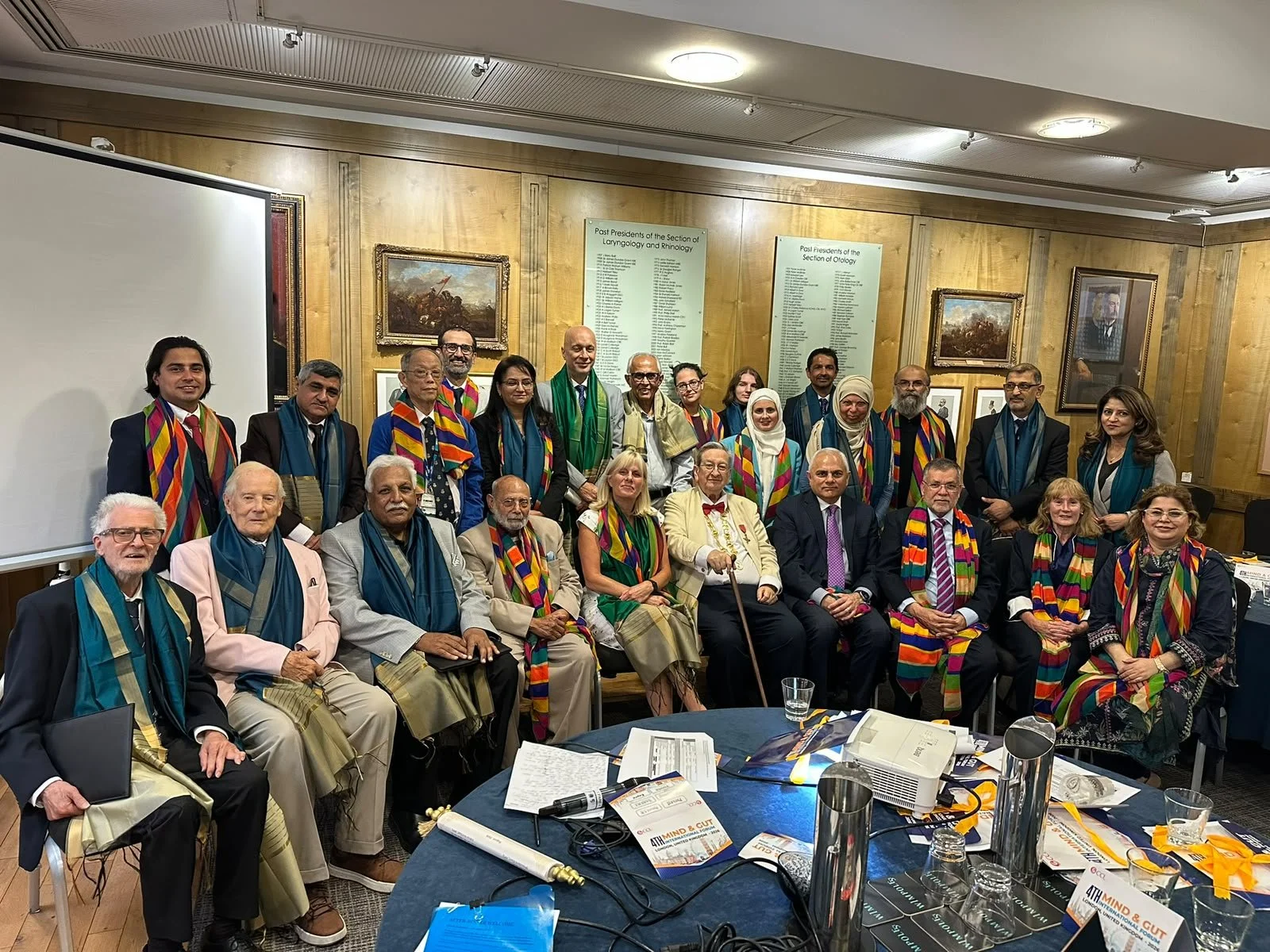
An international symposium was held at the Royal Society of Medicine, London on 24 August 2026. Careif Trustees Professor Rachel Tribe and Afzal Javed presented their papers and spoke about Careif’s role in international collaboration for improving mental health in various countries.
Many national and international organisations participated in this collaborative work, including the Brain Trust UK, Tony Buzan Academy, Journal of Pakistan Psychiatric Society (JPPS), Pakistan Psychiatric Society (PPS), British Pakistani Psychiatrists Association (BPPA), College of Physicians and Surgeons Pakistan (CPSP), Jinnah Sindh Medical University, Pakistan, Jinnah Postgraduate Medical Centre, Pakistan, International Centre for Chemical and Biological Sciences (ICCBS), Pakistan, Liaquat University of Medical and Health Sciences (LUMHS), Pakistan, Health Research Advisory Board (HealthRAB), Pakistan, United Arab Emirates University, UAE, and Careif UK.
The main aim of the forum was to strengthen an East–West platform for advancing global health, human flourishing, ethical innovation, and humanitarian cooperation through international collaboration and knowledge exchange. By bringing together expertise from medicine, science, technology, policy, and humanitarian leadership, the meeting facilitated dialogue and collaboration aimed at developing innovative and sustainable approaches that place human wellbeing at the centre of progress.
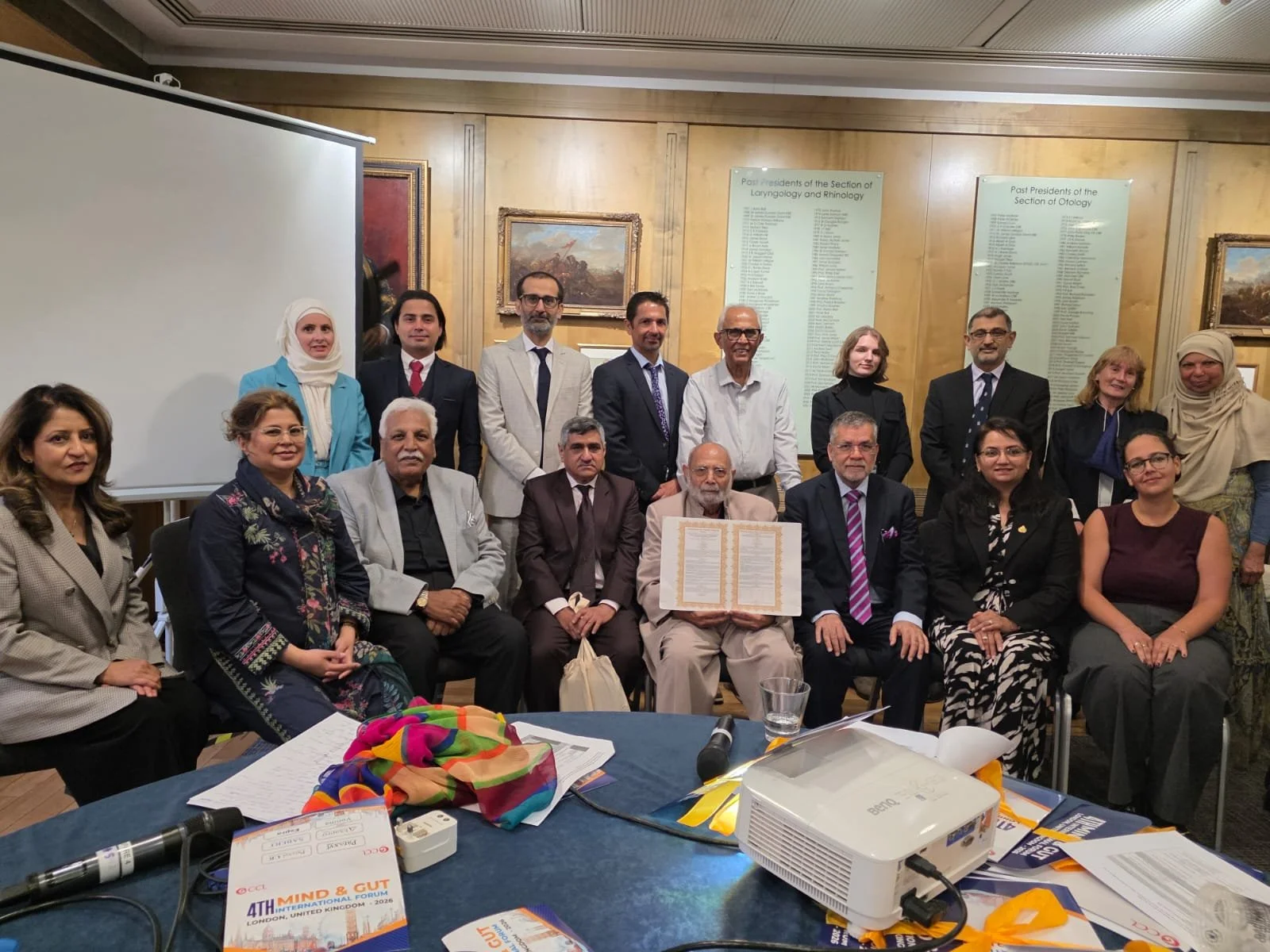
This multidisciplinary global gathering also brought together leaders, experts, and institutions from health, science, technology, education, and humanitarian sectors to explore shared solutions for contemporary global challenges.
Several topics were included in the scientific deliberations of the meeting and there was a specific focus on the convergence of mental health challenges, chronic disease burdens, technological disruption, and humanitarian crises. The need for integrated, person-centred, and ethically informed responses was also discussed. Topics included:
Advancing understanding of the Mind–Gut–Brain Axis and its implications for holistic health and wellbeing.
Promoting the responsible and ethical application of Artificial Intelligence in healthcare, education, research, and public service.
Strengthening multidisciplinary collaboration among healthcare professionals, researchers, educators, policymakers, technologists, and humanitarian leaders.
Supporting the translation of evidence and innovation into policy, practice, and capacity-building initiatives.
Fostering international partnerships that contribute to global wellbeing and the achievement of the United Nations Sustainable Development Goals (SDGs).
Programme highlights
Mind–Gut Forum: Exploring emerging evidence on the Mind–Gut–Brain Axis and its implications for mental, physical, and social wellbeing through advances in neuroscience, psychiatry, gastroenterology, nutrition, and integrative medicine.
Ethical Artificial Intelligence: Examining opportunities, challenges, and ethical considerations associated with the responsible use of artificial intelligence in healthcare, education, research, and human development.
Global Health and Humanitarian Leadership: Addressing contemporary global challenges through multidisciplinary, cross-sector, and international collaboration.
Policy and Practice Dialogues: Translating scientific evidence, innovation, and experience into effective policies, programmes, and measurable impact.