
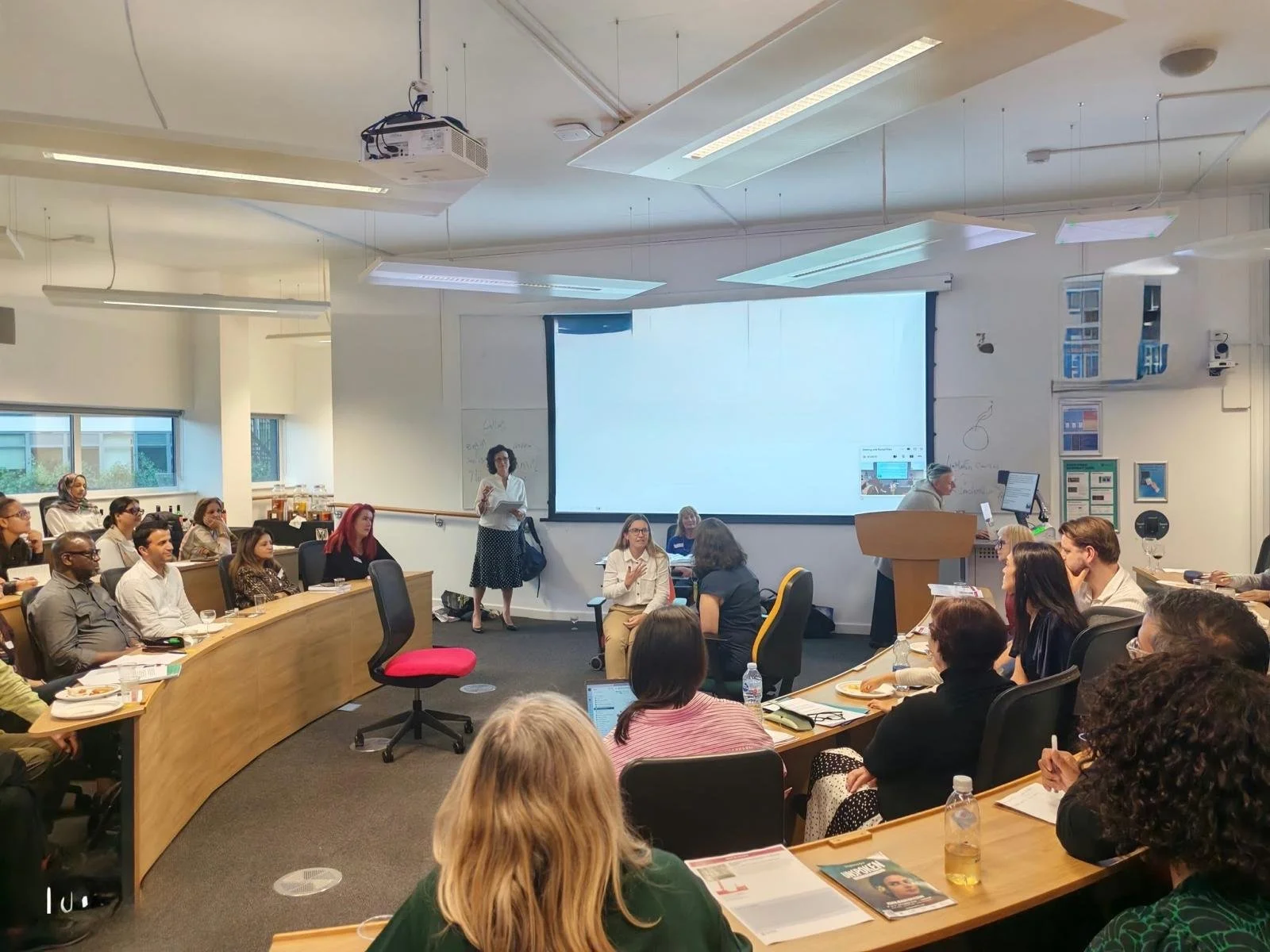
The second edition of Working with Interpreters in Mental Health, edited by Professor Rachel Tribe, Dr Kate Thompson, and Dr Hitesh Raval, was launched by Careif at the University of East London, University Square Stratford, East London, on 17 September.
The launch was to celebrate and disseminate the findings from the second edition of this book. The book provides a valuable training resource for interpreters and mental health professionals, working with culturally and linguistically diverse populations.
It was very well attended with over 60 participants including senior interpreters, psychologists, psychiatrists, and social workers, as well as a range of community organisations and interpreting agencies. The launch was a valuable opportunity, bringing together contributors, professionals working across a range of mental health settings, and interpreters, to celebrate the culmination of a collaborative effort.
One of the highlights of the event was the opportunity for each contributor to give a short presentation, sharing the inspiration behind their chapter. Dr Farsimadan, one of our Careif Associates gave an important talk about her chapter in the book on Reflections of an interpreter working in mental health settings and the impact on her practice later as a counselling psychologist working in partnership with interpreters. The event also included a live interpreting demonstration, providing an opportunity to highlight the vital role interpreters and bicultural workers play in mental health settings.
The launch and book were described by participants as:
“Through role-play, we saw what can happen when working with an interpreter is done less effectively and then what thoughtful, connected practice can look like when the relationship between practitioner, interpreter and client is properly considered.”
“Inspiring, it was wonderful to see such dedication and commitment to such an important topic. “
A senior psychologist said:
“It was such an interesting event. I’m going to do a reflective practice with my team about working with interpreters and bicultural workers and look forward to using the book to support me with the preparation.”
Whilst another said that:
“Working effectively with interpreters is about much more than translating words from one language to another. It’s about reducing barriers to understanding and connection and helping to ensure that people can participate meaningfully and have their voices heard within mental health care.“
They added that:
“The launch underscored that effective work with interpreters depends on more than the exchange of words between languages. It requires attention to the relationships between practitioners, interpreters and the people using services, as well as to the cultural and institutional contexts in which those relationships develop. Bringing these perspectives together creates space for participants to reflect on their own practice and consider how collaboration can be strengthened through training, supervision and ongoing dialogue.”
The event also included the launch of the British Psychological Society Guidance on Working with interpreters in Mental Health written by Professor Rachel Tribe and Dr Kate Thompson.
As a result of this event, an invitation was issued for Careif and Professor Tribe to speak at the Transcultural Psychiatry Special Interest Group Conference at the Royal College of Psychiatrists in November.